Omega Aquatics
Checkerboard Cichlid (Dicrossus filamentosus)
Checkerboard Cichlid (Dicrossus filamentosus)
Couldn't load pickup availability
The Checkerboard Cichlid
The Lace-Finned Jewel of the Amazon
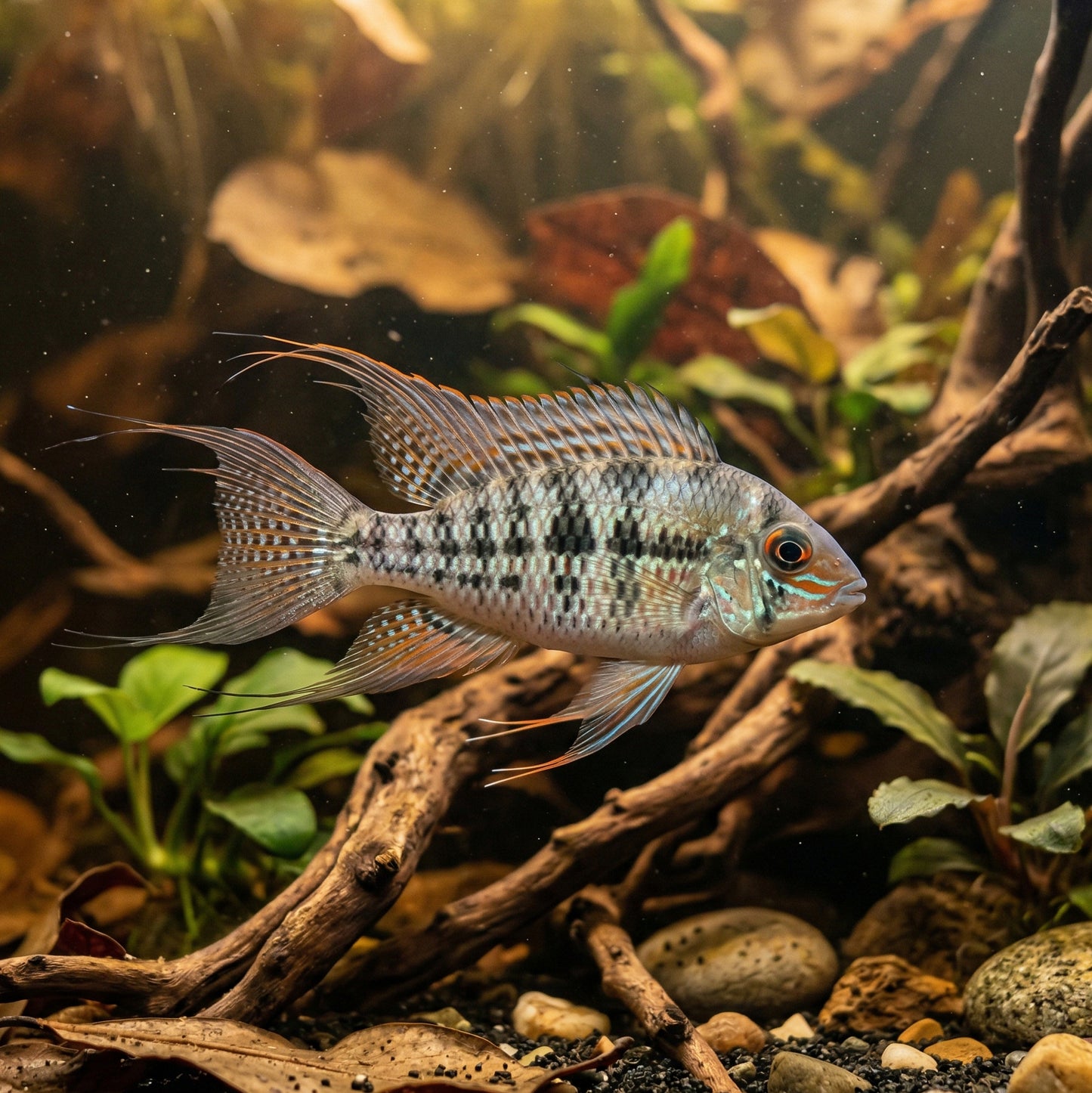
Elevate your aquarium to a masterwork of natural art with the Checkerboard Cichlid (Dicrossus filamentosus). Hailing from the blackwater streams of the Amazon and Orinoco basins, this dwarf cichlid is defined by elegance. While they may appear subtle at first glance, a mature Checkerboard Cichlid—especially a male—is a breathtaking sight. Their slender, pearlescent bodies are adorned with two distinct, shimmering rows of dark squares, creating their namesake pattern. As they mature, males develop elaborate, filamentous extensions on their lyretail and dorsal fins, making them a true showpiece.
Why You’ll Love the Checkerboard Cichlid
Stunning Fin Detail: The delicate, extended filaments on the fins are unlike any other cichlid, creating a "lace-like" effect as they glide.
Complex Behaviour: Like many dwarf cichlids, they display fascinating social structures and intricate courtship behaviours, making them incredibly engaging to observe.
The Blackwater Specialist: Their natural colouration is perfectly adapted to blackwater tanks, blending beautifully with dark water, leaf litter, and driftwood.
Peaceful Demeanor: One of the gentler cichlids available, they are safe for communities with other peaceful species and will not "bulldoze" your aquascape.
Quick Care Stats
| Feature | Requirement |
| Experience Level | Intermediate to Advanced |
| Minimum Tank Size | 75+ Litres |
| Water Temp | 25°C – 29°C |
| pH Range | 4.5 – 6.5 (Very Acidic) |
| Diet | Carnivore (Focus on live and frozen foods) |
| Temperament | Peaceful / Shyer than most cichlids |
Pro-Tips for a Happy Checkerboard
Water parameters are paramount for this species. They demand very soft, acidic water with significant tannins to thrive. A blackwater setup with plenty of driftwood and a leaf litter bed (such as Indian Almond leaves) is not just beneficial—it's essential for replicating their habitat and bringing out their best colours. They are also sensitive to nitrate levels, requiring consistent water maintenance. For the best display, keep them in pairs or small harems (one male, multiple females).
Aquarist Note: While peaceful, they are micro-predators. They should be fed small frozen foods like bloodworms, daphnia, or Cyclops, and they will absolutely hunt (and likely eliminate) tiny neocaridina shrimp.
Share